AI Tutors vs. Apps Like Duolingo in 2026: Is the Hype Earned?
AI tutors promise personalised, on-demand teaching that makes learning apps look outdated. The evidence is mixed, and nobody has tested them head to head.
Published · Updated
HypeGale may earn a commission from links on this page or show paid ads. It never changes our verdicts. How we work
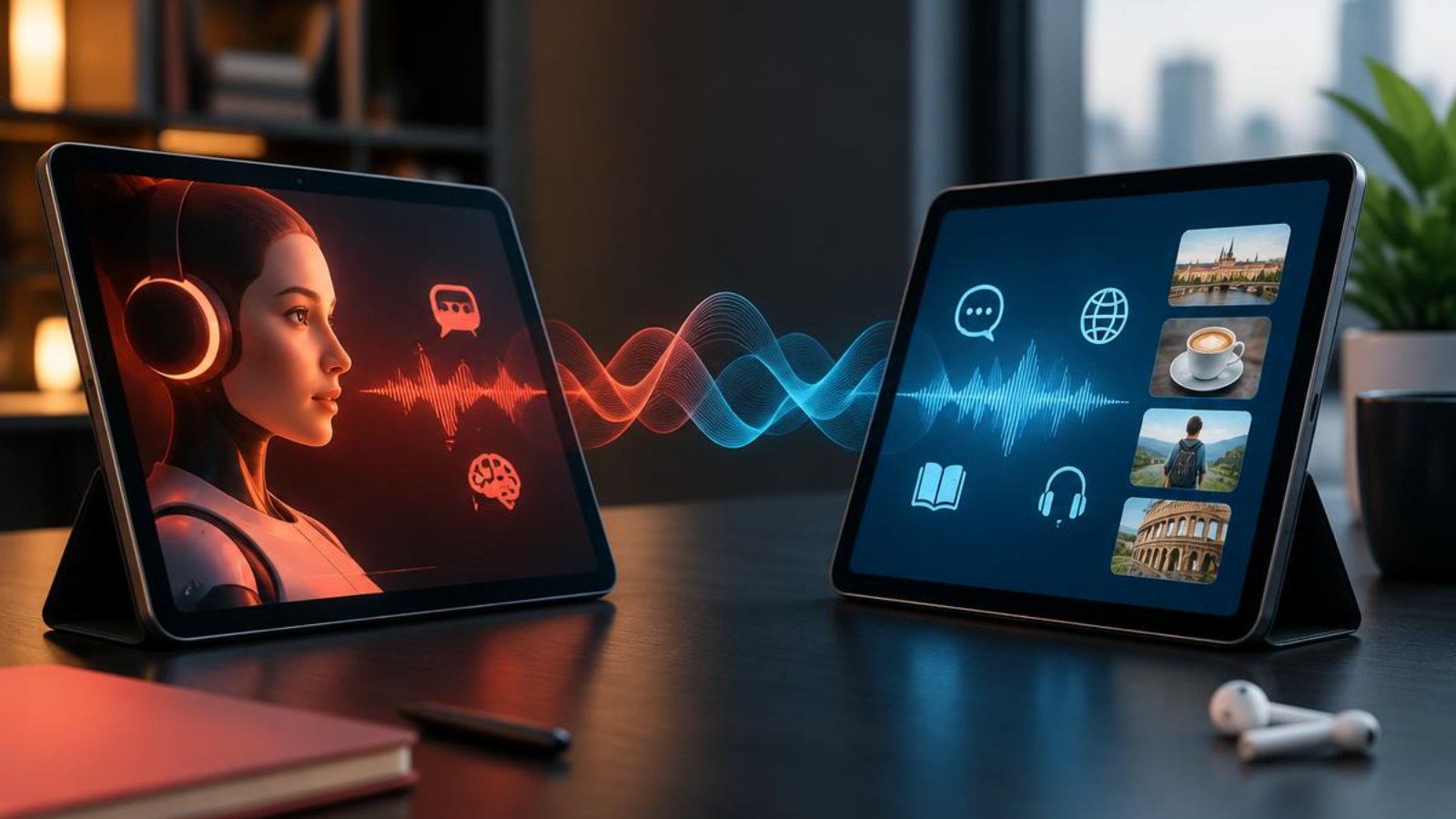
The claim is bold and everywhere: AI can now tutor you in anything, adapt to exactly how you learn and answer any question instantly, making the old generation of learning apps, with their fixed lessons and cartoon streaks, look like flashcards from another era.
There is real substance here. AI tutors are one of the more impressive uses of the technology in 2026. But "impressive tool" and "replaces how you should learn" are two different claims, and the evidence for the second is much thinner than the marketing. Our verdict: too soon to tell.
What's Actually Real Here
Give the category its due, because the best-designed examples have earned some real evidence.
Explaining, on demand, at your level. Stuck on a concept? An AI tutor will explain it, re-explain it more simply, then try an analogy from something you already understand, at 2 a.m., without judgement. For getting past a specific point of confusion, that is a genuine strength.
Endless patient practice. Twenty more example problems, a quiz on the sub-topic you are weak on, or a conversation partner in a language you are learning: it never tires. That responsiveness is an advantage over a fixed lesson tree.
Meeting you where you are. A good AI tutor can start from your actual level and adjust. That is the core of the "personalised learning" promise.
Some controlled evidence. A 2025 randomised crossover trial in Scientific Reports (Kestin and colleagues) gave 194 Harvard physics undergraduates both an AI-tutored lesson and an in-class active-learning lesson on different topics. The AI-tutored lessons produced larger learning gains (median post-test score of 4.5 versus 3.5), and the AI group spent a median of 49 minutes versus 60 in class. The limits matter: it covered introductory material at a single institution, and the tutor was a GPT-4 system built with carefully engineered prompts, including pre-written step-by-step solutions to keep it accurate. It was not an off-the-shelf chatbot. The authors themselves caution that results may not extend to complex synthesis and higher-order thinking.
Where the Hype Outruns the Reality
An unguarded tutor can backfire. A field experiment in PNAS in 2025 (Bastani and colleagues) followed nearly 1,000 high school maths students in Turkey. Those given a plain ChatGPT-style assistant did about 48% better on practice problems, but about 17% worse than students with no AI on a later exam taken without it. A version designed to give hints rather than answers lifted practice performance by 127% and largely avoided that harm. The lesson is not that AI tutors are bad, but that how the tool is set up decides whether you learn or just get answers.
There is no head-to-head against the apps. The headline claim is that AI tutors make apps like Duolingo obsolete, or can beat them outright. We did not find a rigorous comparison of the two. Independent evidence on Duolingo exists but is modest: a 2024 study in Language Learning & Technology (Smith, Jiang and Peters) followed 48 independent learners studying Spanish for three months, about 27 hours in total, and found significant improvement on every receptive and productive measure tested. It is a small, self-selected sample over a short window, so it suggests the app can help but says nothing about how apps compare with AI tutors. Treat "AI beats apps" as plausible, not proven.
Structure is not its strength. An app like Duolingo is selling a path: a sequence, daily prompts, streaks and just enough gamified pressure to make you show up. An open-ended AI tutor gives you an explainer but no path; you bring the plan and the discipline yourself.
Confident wrongness. General-purpose chatbots can state incorrect things with total confidence. For a learner who cannot yet tell right from wrong in the subject, that is a real risk, and it is the reason the Harvard tutor above was given pre-written solutions.
The illusion of learning. Reading a flawless explanation feels like learning, but understanding an explanation is not the same as being able to reproduce it. The PNAS gap appeared exactly when the AI was taken away.
So Which Should You Actually Use?
For most people the sensible answer is both, for different jobs. This is our suggestion, based on what the studies above point to:
- Use a structured course or app for the path. The sequence, the habit and the daily accountability solve the problem most learners actually have: showing up consistently.
- Use an AI tutor for the walls you hit. The concept that will not click, extra targeted practice, or a conversation partner.
- Ask for hints, not answers. Tell the tutor to guide you step by step and not give the solution until you have tried.
- Test yourself without it. Close the chat and attempt similar problems or a short speaking task cold.
- Check facts that matter. Verify definitions, grammar rules and figures against a textbook, a dictionary or your course materials.
- Time-box it. Decide in advance what you want from a session, so a pleasant chat does not replace practice.
For the related student trend, see the AI "second brain", and for the wider picture, what's creating the hype right now.
FAQ
Are AI tutors better than apps like Duolingo?
We could not find a rigorous head-to-head comparison. Purpose-built AI tutors have beaten in-class lessons in at least one trial, and apps provide structure and accountability that open-ended chatbots do not. Use both.
Can an AI tutor replace a real course?
Not reliably on its own. It can be an excellent explainer and practice partner, but it does not supply the sequence, discipline or fact-checking a structured course provides.
What's the biggest risk of learning with AI?
Two: general chatbots can state wrong things confidently, and an unguarded assistant can lift practice scores while leaving you worse off once it is removed. Active practice matters more than passive reading.
How should students use AI tutors effectively?
As a supplement: keep a structured path for consistency, ask for hints rather than answers, and test yourself without the AI afterwards.
Hype-o-meter: Too Soon to Tell
A carefully built tutor has shown real gains in one trial, and an unguarded one has shown real harm in another, so the technology works when it is designed well and not otherwise. The bigger claim, that AI tutors make learning apps obsolete, has no head-to-head evidence yet. Pair the two: apps for the path, AI for the walls.
Sources
- AI tutoring outperforms in-class active learning: an RCT - Kestin et al., Scientific Reports, 2025
- Generative AI without guardrails can harm learning - Wharton Knowledge summary of Bastani et al., PNAS, 2025
- The effectiveness of Duolingo in developing receptive and productive language knowledge and proficiency - Smith, Jiang and Peters, Language Learning & Technology, 2024
Keep reading
Related articles

Is Blogging Dead in 2026? Starting a Side-Hustle Site in the Age of AI Search
AI search summaries are supposedly killing blog traffic. We look at what's actually happening to independent sites, and whether starting one still makes sense.
5 min read
Micro-Credentials in 2026: Career Boost or Expensive Badge?
Short online certificates promise faster hiring and higher pay. The best ones help. But most of the glowing numbers come from the companies selling them.
7 min read
Europe's School Phone Bans: What the Evidence Really Shows
France, Sweden, Denmark and more are banning phones in school. Teachers report better focus, but the research on grades and wellbeing is far less clear-cut.
8 min read

Do AI Essay Detectors Actually Work in 2026?
Schools lean on AI detectors to catch cheating, but false positives and bias against non-native English writers keep undercutting the tech.
6 min read