Do AI Essay Detectors Actually Work in 2026?
Schools lean on AI detectors to catch cheating, but false positives and bias against non-native English writers keep undercutting the tech.
Published · Updated
HypeGale may earn a commission from links on this page or show paid ads. It never changes our verdicts. How we work
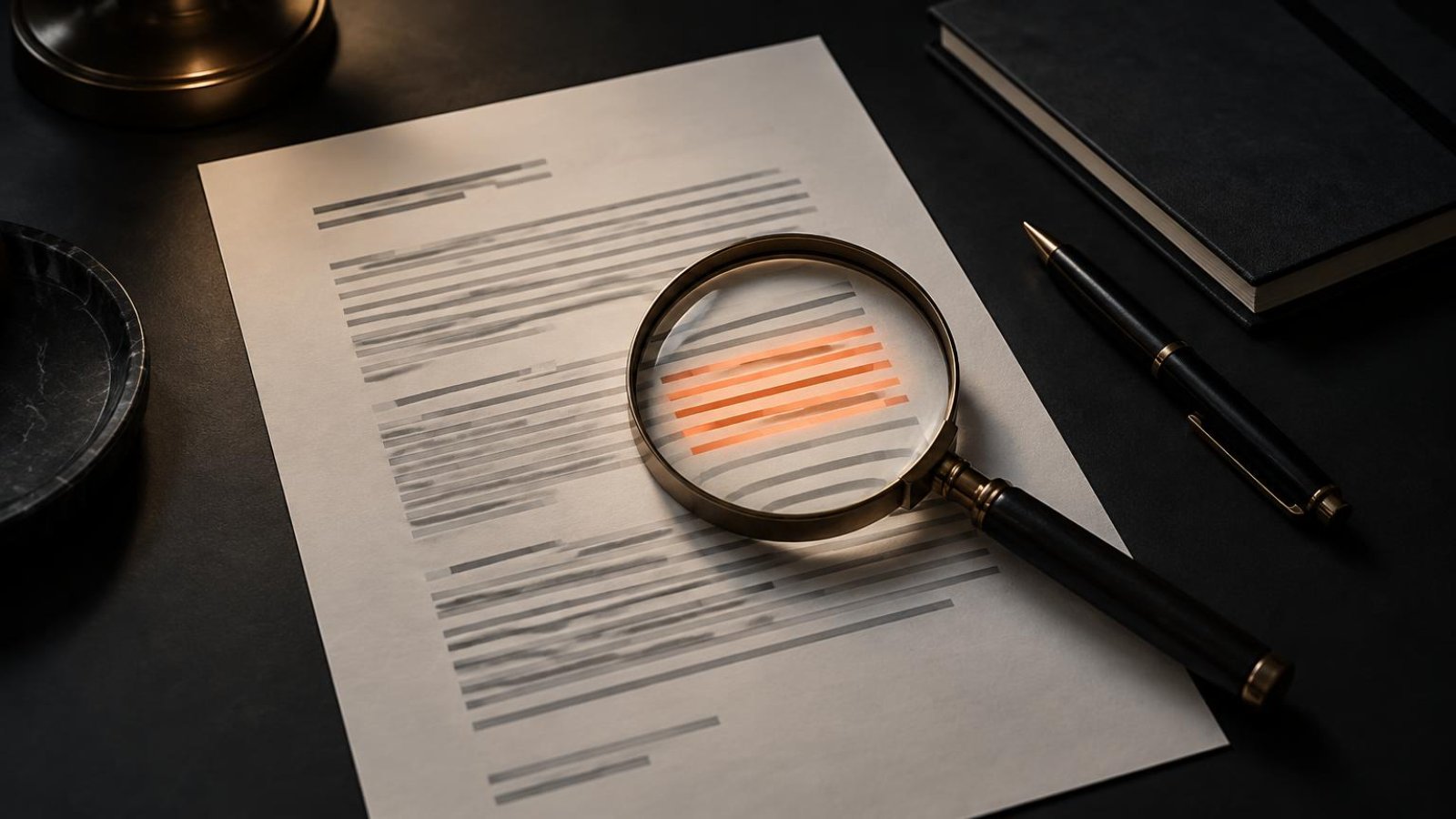
Ask a teacher whether they trust their AI detector and you will usually get a pause before the answer. That pause is the whole story. Since ChatGPT arrived in late 2022, schools and universities have raced to bolt AI-detection scores onto Turnitin, GPTZero and a dozen competitors, treating a percentage on a dashboard as evidence of cheating. Nearly four years on, the honest answer is that these tools flag patterns statistically associated with AI-generated text. They do not, and cannot, prove a student did not write something.
What's Actually Real Here
AI detectors are not pure snake oil, and the problem they target is real. Students do use chatbots to produce work, and instructors are right to worry about it.
What the tools measure. Detectors do not "know" a paper was written by a chatbot. They estimate how predictable a piece of text is. AI models tend to choose likely, low-surprise word sequences, while human writing is comparatively erratic. Detectors score that predictability and turn it into a percentage. It is a reasonable statistical heuristic, not a fingerprint match.
Some signal exists. Turnitin reports that, on documents containing 20% or more AI writing, its document-level false positive rate is under 1%. That is the company's own figure, and it is a narrower claim than "1% overall", as the next sections show.
Where the Hype Outruns the Reality
Bias against non-native writers. A widely cited Stanford study (Liang and colleagues, published in the journal Patterns in 2023) ran seven popular GPT detectors on 91 TOEFL essays written by non-native English speakers. The detectors misclassified them as AI-generated 61% of the time on average, and all seven flagged 18 of the 91 essays. Essays by US eighth-graders were classified with near-perfect accuracy. The likely reason is that simpler, more predictable vocabulary looks "machine-like" to a predictability score. The authors also showed that simple prompting could reduce the bias and slip AI text past the detectors, which means a determined cheater may have an easy workaround while an honest writer with a plain style may not.
Independent testing is unimpressive. A team led by Debora Weber-Wulff tested 14 detection systems, including Turnitin and PlagiarismCheck, and published the results in the International Journal for Educational Integrity. Their conclusion was that the available tools are "neither accurate nor reliable". Errors leaned towards passing AI-written text off as human rather than the reverse, and paraphrasing or machine translation made detection worse still.
The vendor's numbers have fine print. Turnitin's own write-up says it found accuracy fell for documents with less than 20% AI writing, which is why scores in that range now carry an asterisk, and it raised its minimum word count from 150 to 300. At sentence level it cites a false positive rate of about 4%, and says 54% of those wrongly flagged sentences sit right next to genuinely AI-written text. Those figures date from 2023, and we could not find an independent audit of the current version. The pages we reviewed do not specifically address non-native writers.
Scale turns a small rate into real people. Vanderbilt, which announced in August 2023 that it was disabling the feature, noted it had submitted around 75,000 papers to Turnitin in 2022. At a 1% error rate that would be about 750 papers wrongly flagged in a year. That is the university's arithmetic on a vendor claim, not a measured count, but it shows why a "small" rate still feels large to the students on the wrong end of it.
Schools Are Pulling Back
The clearest signal is what institutions are doing, not what vendors are claiming.
- Vanderbilt (2023) cited the lack of transparency about how Turnitin produces its score, the risk of false positives, bias against non-native speakers and privacy questions about sending student work to a third party.
- The University of Pittsburgh's Teaching Center disabled the feature after Turnitin launched it in 2023, concluding that detection software was not reliable enough to use without a substantial risk of false positives.
- The University of Waterloo announced in September 2025 that it was discontinuing the feature. Its stated reasons were unreliability (its own testing found human-written text flagged as 100% AI-generated), bias against non-native English speakers and cost. It says time is better spent on education and assignment redesign.
Different institutions gave different reasons, and not all of them put the false-accusation risk first. But the common thread is that the scores were not trustworthy enough to justify the downside.
What to Do Instead
None of this means AI misuse is not real, only that a score is the weakest kind of evidence. The following steps are our suggestions, not findings from any single study.
If you are a student:
- Keep your process: outlines, notes, drafts and the version history of your document.
- Ask what specific evidence an accusation rests on, beyond a percentage.
- Offer to talk through your argument or write a short passage under supervision.
If you are an instructor:
- Treat a score as a reason to start a conversation, never as a verdict. Turnitin itself says to use it that way.
- Be most cautious with short texts, formulaic assignments and writers working in a second language.
- Pair any flag with corroborating evidence: a Google Docs revision history, an in-class writing sample, an oral defence of the essay's arguments.
- Consider redesigning assignments, with in-class writing, oral checkpoints and scaffolded drafts, so that process is assessed and not just the final product.
FAQ
Can a detector prove a student used AI?
No. Detection scores are probabilistic estimates, not verified evidence, which is why Turnitin itself advises using them to start a conversation and why several universities have turned the feature off.
Are these tools biased against non-native English speakers?
Peer-reviewed research (Liang et al., 2023) found that several popular detectors misclassified most TOEFL essays by non-native writers as AI-generated, while correctly classifying essays by US eighth-graders. Detector vendors have disputed individual findings, and newer versions may differ, but we found no independent evidence that the problem has been solved.
Why are some schools turning detectors off instead of upgrading them?
Their reasons vary. Waterloo cited unreliability, bias and cost; Vanderbilt cited transparency, false positives, bias and privacy. Many also say redesigning assignments works better than policing.
Is Turnitin's "under 1%" false positive rate accurate?
It is the company's figure, and it applies to documents with at least 20% AI writing. Turnitin reports weaker performance below that, and about 4% at sentence level.
Hype-o-meter: Overhyped
AI essay detectors were sold as a reliable enforcement layer for academic integrity. Documented bias against non-native English writers, weak results in independent testing, vendor figures with significant fine print and a growing list of universities switching the feature off say otherwise. They are at best a prompt for a conversation, never proof.
Sources
- GPT detectors are biased against non-native English writers - Liang et al., arXiv preprint (published in Patterns, 2023)
- Testing of Detection Tools for AI-Generated Text - Weber-Wulff et al., International Journal for Educational Integrity, 2023
- Guidance on AI detection and why we're disabling Turnitin's AI detector - Vanderbilt University, 2023
- Encouraging academic integrity - University of Pittsburgh Teaching Center
- Discontinuing use of AI detection functionality in Turnitin - University of Waterloo, September 2025
- AI writing detection update from Turnitin's Chief Product Officer - Turnitin, 2023
- Understanding the false positive rate for sentences of our AI writing detection capability - Turnitin
Keep reading
Related articles

Is Blogging Dead in 2026? Starting a Side-Hustle Site in the Age of AI Search
AI search summaries are supposedly killing blog traffic. We look at what's actually happening to independent sites, and whether starting one still makes sense.
5 min read
Micro-Credentials in 2026: Career Boost or Expensive Badge?
Short online certificates promise faster hiring and higher pay. The best ones help. But most of the glowing numbers come from the companies selling them.
7 min read
Europe's School Phone Bans: What the Evidence Really Shows
France, Sweden, Denmark and more are banning phones in school. Teachers report better focus, but the research on grades and wellbeing is far less clear-cut.
8 min read
The AI 'Second Brain' for Students: Smarter, or Just Busier?
AI note-takers and 'second brain' tools promise to organise your thinking and boost grades. The filing is useful, but there is no evidence they make students smarter.
6 min read