The AI 'Second Brain' for Students: Smarter, or Just Busier?
AI note-takers and 'second brain' tools promise to organise your thinking and boost grades. The filing is useful, but there is no evidence they make students smarter.
Published · Updated
HypeGale may earn a commission from links on this page or show paid ads. It never changes our verdicts. How we work
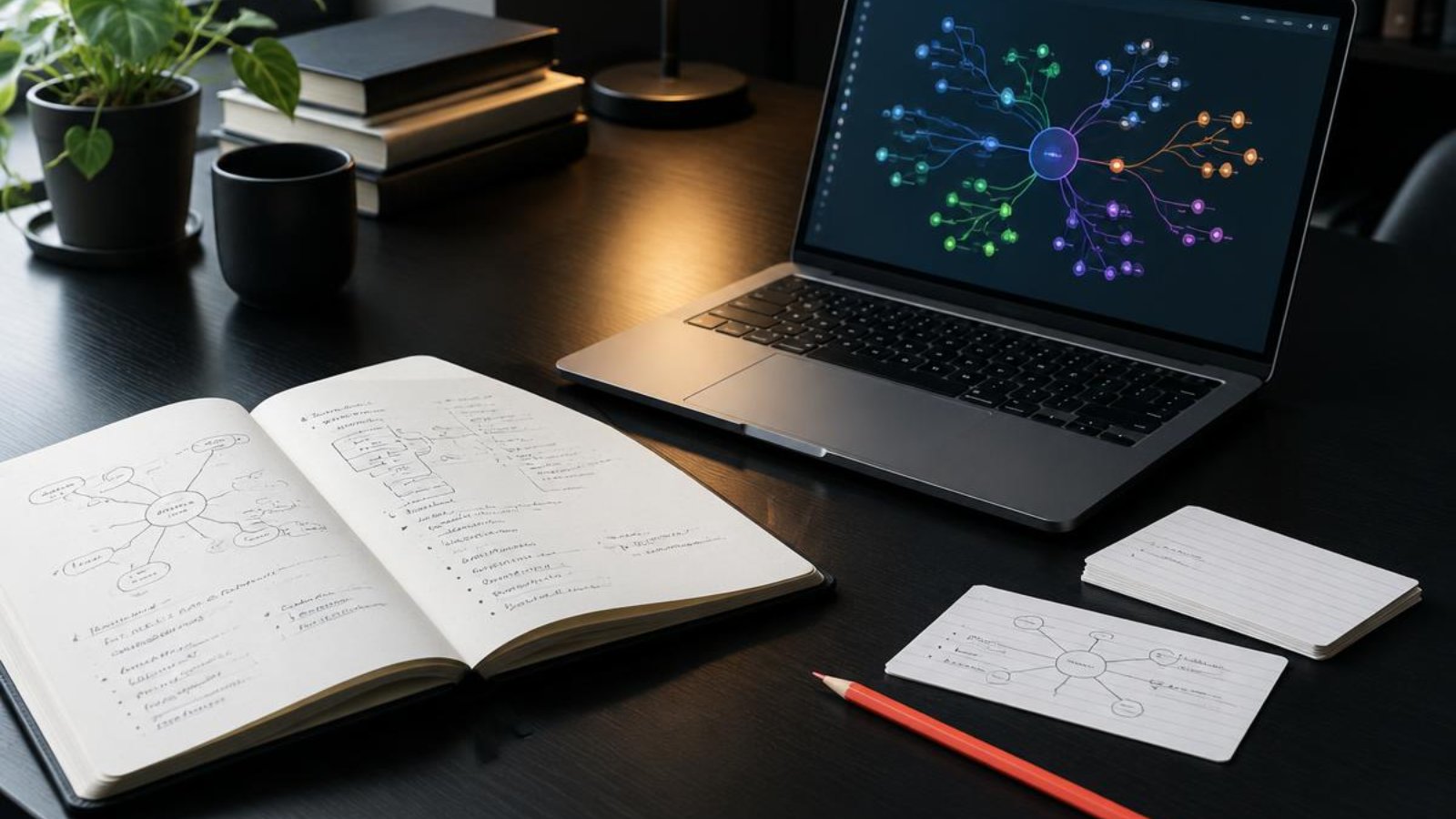
The dream is intoxicating, especially at exam time: an AI-powered "second brain" that captures every lecture, summarises every reading, connects every idea and hands you study notes on demand. Never forget anything. Never fall behind. Outsource the tedious parts of thinking and keep the good parts for yourself.
In 2026 there is a whole category of tools promising something like this. Some are genuinely useful as organisers. But there is a quiet trap in the middle of the pitch, and it is worth seeing clearly before you rebuild your study life around one. Our verdict: the filing is fine, the "smarter" part is not proven.
What's Actually Real Here
Let's be fair, because the useful version exists.
Capture and summarise. Recording a lecture and getting a searchable summary is a plausible time-saver, especially for review or when you missed a session. As a reference layer, a searchable record of material you have already engaged with, it makes sense.
Organise and connect. Better tools can link related notes, surface earlier notes on the same topic and turn a chaotic pile of material into something navigable. For large projects and research, that is real convenience.
Reduce busywork. Reformatting, tidying and turning messy notes into a clean study sheet is admin that AI is well suited to.
Note what these have in common: they save time on handling material. None of them is shown to help you learn it. We could not find a controlled study showing that AI note tools improve grades, so treat any tool that claims it with caution.
Where the Hype Outruns the Reality
The pitch quietly swaps "organised" for "learned". Those are different things.
Learning research has long pointed to effort as the mechanism. In a widely cited review in Psychological Science in the Public Interest (2013), Dunlosky and colleagues rated ten common study techniques. Practice testing and distributed (spaced) practice earned the highest utility rating. Summarisation, highlighting and rereading were rated low utility. An earlier lab study by Roediger and Karpicke (Psychological Science, 2006) found that students who restudied a passage did better on a test five minutes later, but students who practised recalling it did better after two days and after a week. Rereading feels good in the moment; retrieval pays off later.
Now look at what a second brain automates. When the AI summarises the reading, it did the distilling. When it makes your flashcards, it decided what matters, not you. You end up with beautiful notes and a thinner memory than messier, self-made notes might have given you. That is a reasoned inference from the research above, not a result measured on these specific tools.
Direct evidence on AI and learning is early, and two related studies point the same way:
- Writing with an LLM. A preprint from MIT Media Lab researchers (Kosmyna and colleagues), "Your Brain on ChatGPT", compared essay writing with an LLM, a search engine and no tools, using EEG. The LLM group showed weaker brain-network connectivity, a lower sense of ownership of their essays and more difficulty recalling what they had written. It is small (54 participants, 18 in the fourth session), is a preprint, and is about essays rather than note-taking.
- Maths practice. In a PNAS field experiment (Bastani and colleagues) with nearly 1,000 high school students in Turkey, those given an unrestricted GPT-style assistant scored about 17% lower than students without AI once it was removed. A version built with hints and guardrails largely avoided that harm. We cover it in our AI tutors piece.
Neither tests a "second brain" directly. Together they suggest the risk lies in what the tool takes over, not in its existence.
How to Use a Second Brain Without Dumbing Yourself Down
The tool is not the problem; the workflow is. This routine is our suggestion, built around the research above rather than drawn from a specific study of note apps:
- Capture selectively. Record the lecture if you need to, but decide what you will actually revisit. Recording everything creates an archive you will never open.
- Do the thinking first. Write what you remember from the week, from memory, before opening any AI summary. Self-written summaries are not a magic fix (Dunlosky rated summarisation low), so treat this as the warm-up.
- Then check. Compare against the AI summary or your notes and fix the gaps. The gaps are your study list.
- Test yourself, spaced out. Turn the gaps into questions and revisit them across several days rather than in one cram session. This is the step the research rates highest, and it is the one no tool can do for you.
- Prune. If you have not opened a folder of notes in a month, you are capturing too much.
There is also an attention angle: an elaborate second-brain system can become its own form of productive procrastination, endlessly tending the system instead of studying. If that sounds familiar, our take on digital minimalism is a useful companion read, and the wider picture is in what's creating the hype right now.
FAQ
Does an AI "second brain" actually make you smarter?
There is no good evidence that it does. As a filing and reference system for things you have already learned, it can save time. Used to summarise and distil for you, it removes effort that learning research associates with durable understanding.
What's the biggest mistake students make with AI note tools?
Letting the AI do the initial distilling and then rereading its output. Rereading and summary-reading are low-utility study methods; self-testing is not.
How should I use AI for studying without hurting my learning?
Try recalling and writing first, then let AI organise or check your work. Make self-testing, spaced over several days, non-negotiable, and capture selectively.
Are AI note-takers worth it at all?
As a reference layer and for admin, they can be. The value is in search and tidying, not in replacing the thinking. Check what any tool does with your recordings and notes before uploading lectures or other people's material.
Hype-o-meter: Overhyped
The organising features are fine, but the promise that a second brain makes you smarter or lifts your grades has no direct evidence behind it, and the nearest research suggests that handing over the distilling and summarising works against learning. Use it to file what you have worked through, never to skip working through it.
Sources
- Which Study Strategies Make the Grade? - Association for Psychological Science, on Dunlosky et al., Psychological Science in the Public Interest, 2013
- Test-enhanced learning: taking memory tests improves long-term retention - Roediger and Karpicke, Psychological Science, 2006
- Your Brain on ChatGPT: Accumulation of Cognitive Debt when Using an AI Assistant for Essay Writing Task - Kosmyna et al., arXiv preprint
- Generative AI without guardrails can harm learning - Wharton Knowledge summary of Bastani et al., PNAS, 2025
Keep reading
Related articles
Is Blogging Dead in 2026? Starting a Side-Hustle Site in the Age of AI Search
AI search summaries are supposedly killing blog traffic. We look at what's actually happening to independent sites, and whether starting one still makes sense.
5 min read
Micro-Credentials in 2026: Career Boost or Expensive Badge?
Short online certificates promise faster hiring and higher pay. The best ones help. But most of the glowing numbers come from the companies selling them.
7 min read
Europe's School Phone Bans: What the Evidence Really Shows
France, Sweden, Denmark and more are banning phones in school. Teachers report better focus, but the research on grades and wellbeing is far less clear-cut.
8 min read
Do AI Essay Detectors Actually Work in 2026?
Schools lean on AI detectors to catch cheating, but false positives and bias against non-native English writers keep undercutting the tech.
6 min read