AI Health Coaches on Wearables: Is There Evidence They Work?
Fitbit and Whoop sell AI coaches; Oura is trialing one. We looked for evidence that they change behavior or health, and what does not exist yet.
Reviewed by the HypeGale Content Team. This article is for information only and is not medical advice. Talk to a qualified professional about your own situation.
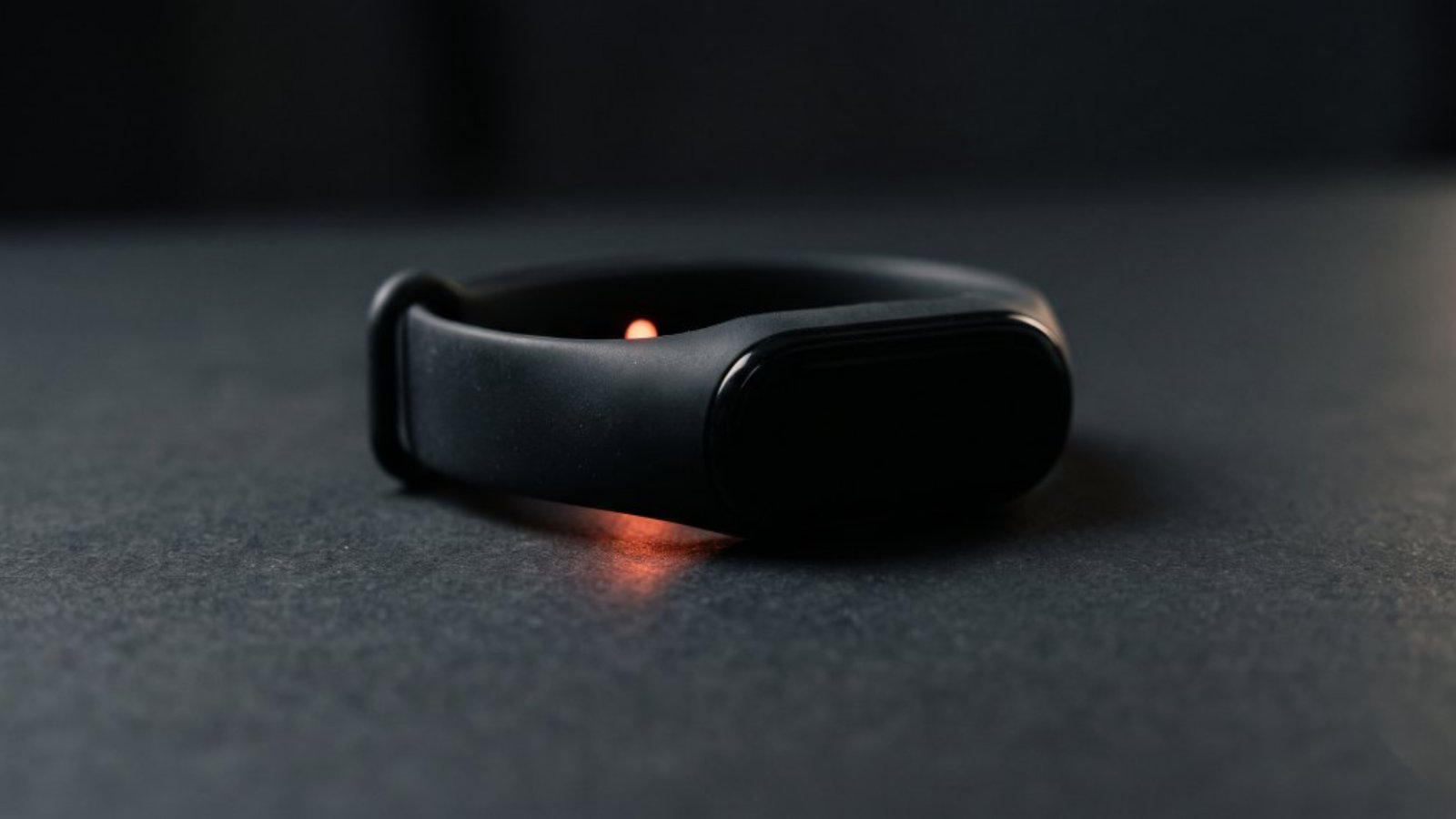
Short answer: Not yet. Google's Fitbit and Whoop sell AI coaches and Oura is testing one in a trial, but we found no published trial showing that any of them improves health outcomes. The older evidence is for plain activity trackers, and it shows small, short-term gains in daily steps. Treat AI coaches as a convenient way to read your data, not as proof of better health. This is general information, not medical advice; ask a clinician about personal health decisions.
The hook is Google's Fitbit Edge, a $179.99 band that went on sale Oct. 27 with a Gemini-based coach. We looked at whether the pitch outruns the proof. (For the ring that started this category, see our look at the Oura Ring, and for the wider gadget wave, AI Wearables in 2026.)
What's Actually Real Here
The products exist and they cost money. TechCrunch reported on Oct. 12 that the Fitbit Edge is $179.99, with store availability on Oct. 27, and that the coach needs a Google Health Premium membership. Google's store page agrees on price and says the coaching is "included with a Google Health Premium membership." TechCrunch reported in May that Premium is $9.99 a month or $99 a year, and free for Google AI Pro and Ultra subscribers. On those figures, the Edge plus a year of Premium would be about $279, before any free-trial period.
Google says how it tested its coach, and the test is not an outcome study. A Google Research post from Oct. 27, 2025 describes a rating framework covering safety, helpfulness, accuracy, relevance and personalization, with more than 1 million human annotations and over 100,000 hours of human evaluation. The post reports no outcome data, such as measured health improvements, and carries the footnote "Not a medical device."
Whoop's coach is in beta and users report errors. Gear Patrol (July 6, 2026) says Whoop's AI features are listed in beta and powered by OpenAI. Reddit users it quotes reported the coach inventing an elevation stat and logging caffeine and alcohol that never happened. Others reported real value. This is anecdote, not a study.
The best test of an AI coach is still running. A protocol published in JMIR Research Protocols (2026) describes GONDOR-AS, a 12-week randomized trial of 165 sedentary adults aged 30 to 65. One arm gets Oura Ring plus AI coaching from a large language model, one gets the ring plus supervised high-intensity training, and the control gets the ring only. The co-primary outcomes are arterial stiffness and VO2max. The protocol reports no results. It is funded by Oura, and several authors are Oura employees, though the paper says the academic site keeps independence and the sponsor cannot block publication.
A second trial exists too. A March 2026 medRxiv preprint (not peer reviewed) describes the My Heart Counts study, which includes a two-week randomized crossover test of LLM-generated coaching prompts against a generic reminder, with daily steps as the main outcome. It reports no results.
Where the Hype Outruns the Reality
No result, no claim. Until a trial reports, "AI coach improves health" is a hypothesis. Both trials above are short, and the authors of the preprint acknowledge two weeks cannot show lasting change.
The older evidence is modest. A 2020 meta-analysis in JMIR mHealth and uHealth pooled 12 randomized trials with 1,693 adults using activity trackers. Across 7 trials, steps per day rose (effect size 0.332, 95% CI 0.16 to 0.50), while 4 trials found no significant effect on weight. The authors flag small samples, short follow-up, signs of publication bias, and trouble separating the tracker from add-on coaching or reminders. The search ended in 2017, so it says nothing about AI coaches, and the paper quotes two different overall effect sizes.
Accuracy is the open problem. A coach that sounds confident can still be wrong, as the Whoop reports illustrate. Google calls its coach a general wellness product, not a medical device, and the Edge page describes features such as AFib detection that are separate from the coach.
Vendor-run evidence is not independent. Google's evaluation and the Oura trial are company-funded or company-run. That does not make them wrong, but it is a reason to wait for independent replication.
A Practical Approach
- Decide what you want. If it is a nudge to move more, a basic tracker may do what the evidence supports.
- Add up the real cost. Device price plus the subscription, for as long as you would keep it. A coach you stop paying for stops coaching.
- Check what data it uses. Google's coach can draw on fitness, sleep and, if you grant access, medical records. Decide what you are comfortable sharing.
- Treat the output as a suggestion. Cross-check anything unusual, and do not change medication or treatment based on a coach.
- See a clinician for symptoms. None of these products replaces one.
FAQ
Do AI coaches on wearables improve health? No published trial we found shows that. Two are under way.
Is the Fitbit Edge coach free? No. It needs Google Health Premium, which TechCrunch reported at $9.99 a month or $99 a year.
Is Whoop's AI coach reliable? It is in beta, and users on Reddit reported errors. Others reported it useful.
Is the Oura trial independent? It is funded by Oura, with Oura-employed authors, though an academic site runs the testing.
Is any of this medical advice? No. This is general information; ask a clinician about your own decisions.
Things change quickly. This article reflects what was publicly known when it was written or last updated, so details such as prices, availability, rules and product specs may have changed since. Always check the official source before you buy or decide.
Sources
- TechCrunch: Google's Fitbit Edge (Oct. 12, 2026)
- Google Store: Fitbit Edge
- TechCrunch: Google's $9.99 AI health coach launches May 19 (May 7, 2026)
- Google Research: How we are building the personal health coach (Oct. 27, 2025)
- Gear Patrol: Whoop AI Reddit user feedback (July 6, 2026)
- JMIR Research Protocols: GONDOR-AS trial protocol (2026)
- medRxiv: My Heart Counts design and rationale (preprint, March 2026)
- Tang et al., JMIR mHealth and uHealth: Activity trackers meta-analysis (2020, via PMC)
Keep reading
Related articles

At-Home Microplastics Tests: What Your Number Can't Tell You
Mail-order microplastics tests give you a number, but experts say there is no standard to judge it against. Here is what they can and cannot tell you.
6 min read
Super-Foam Running Shoes for Everyday Runners: Do You Need Carbon and Max Cushioning?
Carbon-plated super shoes work at race pace, but the benefit shrinks and gets less predictable at everyday paces. Here is what the research says, and when a daily trainer is the smarter buy.
6 min read

Poland's Cold-Water Swimming Craze: Health Hype or Real Benefits?
Morsowanie, Polish winter swimming, draws thousands to the Baltic every year. The short-term effects are real, but the case for lasting health benefits is still thin.
7 min read

Weight-Loss Pills in 2026: Do GLP-1 Tablets Live Up to the Hype?
The Wegovy pill and Lilly's Foundayo have made GLP-1s a daily tablet. They work, but not quite like the injections. Here's the honest picture.
8 min read