AI Wearables in 2026: Worth the Hype or Just Hardware?
AI pins, glasses and pendants promised to kill the smartphone. Here's what they actually do well in 2026 — and where the hype falls apart.
Published · Updated
HypeGale may earn a commission from links on this page or show paid ads. It never changes our verdicts. How we work
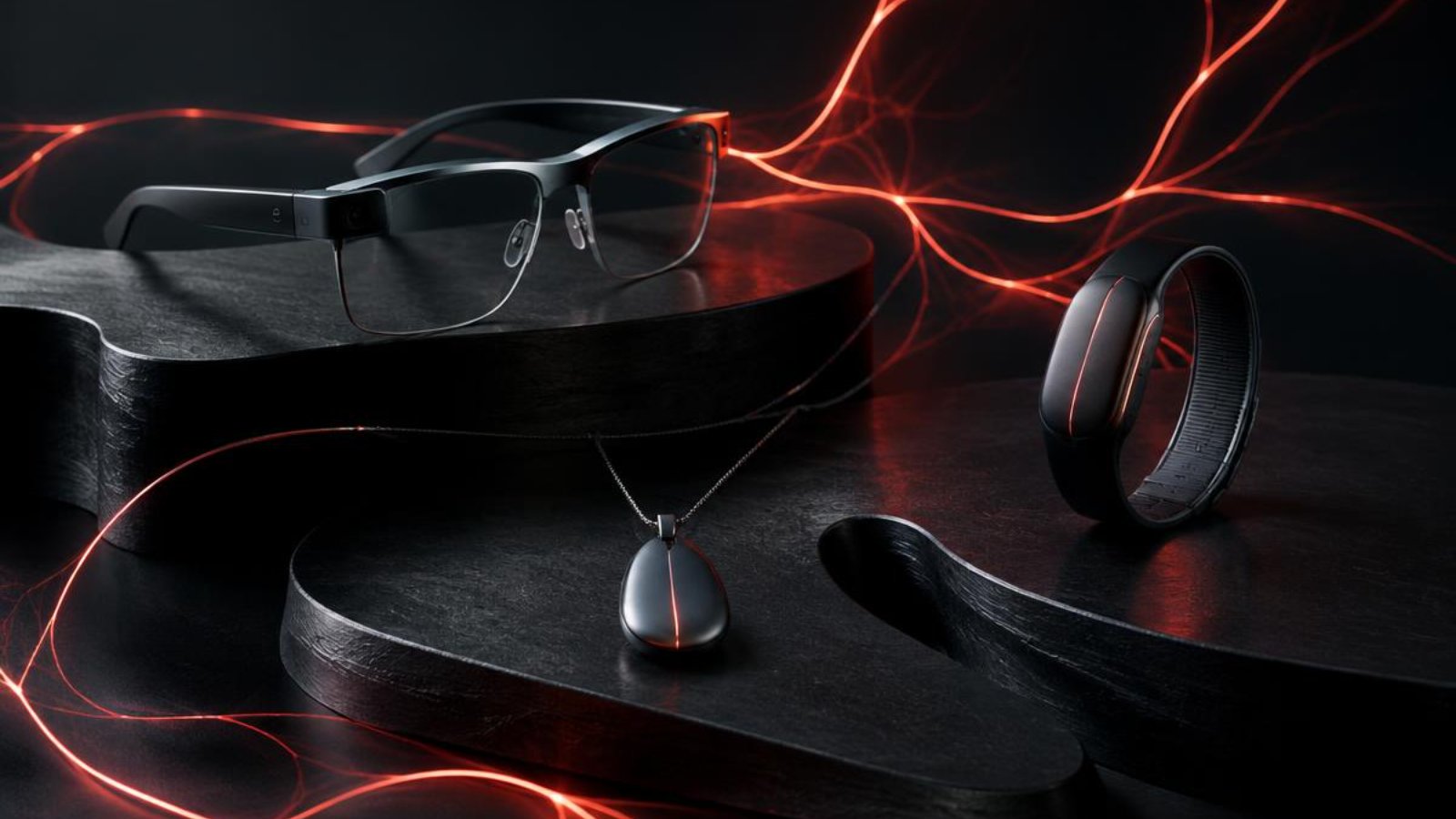
Every launch video looks the same. Someone taps a little device on their chest, or glances at a pair of glasses, asks a question out loud, and the future answers back. No screen. No scrolling. Just you and a calm AI voice that seems to know everything.
It's a great pitch. The question HypeGale keeps coming back to is simpler: after the demo ends, do you actually reach for the thing the next morning? HypeGale doesn't test products itself, so this is a read of the published evidence and what the category's own history shows.
What's Actually Real Here
Give the category its due, because parts of it are real.
Hands-free capture is the standout use. Being able to say "remind me to email Priya about the invoice" while you're walking, cooking, or holding a toddler is useful. Live translation is arguably the feature nobody put on the box: point, listen, and hold a rough conversation in a language you don't speak. And "what am I looking at?" queries, where you ask about a landmark, a menu, or a plant, are a natural fit for a camera on your face.
The common thread: these are all things you do while your hands and eyes are busy. That's the sweet spot. When the wearable handles a task your phone can't easily do, it wins.
The money and customers have moved toward glasses rather than pins. EssilorLuxottica said it sold more than 7 million Ray-Ban and Oakley smart glasses in 2025, more than triple the previous year, according to UploadVR's report of its Q4 2025 results. A snapshot of the main glasses options as announced (prices and availability change, so check before buying):
- Ray-Ban Meta Gen 3: from $449 in the US, announced at Meta Connect in September 2026, with up to 9 hours of battery (Engadget). The previous Gen 2 launched at $379 with up to 8 hours per charge and a case adding up to 48 hours (GSMArena).
- Meta Ray-Ban Display: $799 in the US, sold with the Neural Band wristband. It has a full-color display in the right lens only (600 x 600 pixels, 20-degree field of view), up to six hours of mixed use and up to 30 hours with the case (Road to VR). Meta has begun rolling it out beyond the US, at £749 in the UK according to Engadget's Connect coverage.
- Android XR glasses: Google and Samsung, with Warby Parker and Gentle Monster on frame design. A Korea Herald report, relayed by 9to5Google on 1 October 2026, cites a Samsung official saying the first models arrive in November 2026 without a display. No price had been disclosed in that report.
Where the Hype Outruns the Reality
The marketing promise isn't "a useful accessory." It's "throw away your phone." And that's where it breaks.
For anything involving reading, choosing, or scanning (comparing three options, skimming a message thread, checking a map) a screen is simply faster than a voice reading a list at you. Voice is a narrow pipe. Most of daily digital life still flows through your eyes.
Then there are the unglamorous realities:
- Battery. Always-listening hardware drains fast. Even the display glasses quote about six hours of mixed use, which is a good result for a screen on your face and still short of a full waking day.
- Latency. A two-second pause before an answer can feel magical once and annoying by the tenth time.
- The trust gap. Confidently wrong answers are worse when there's no screen to sanity-check them against.
The first wave is a cautionary tale. The Humane AI Pin launched at $699 and was cut to $499. In February 2025 HP bought Humane's assets for $116 million, and TechCrunch reported that the devices would stop working on 28 February 2025 because they could no longer connect to Humane's servers. Only buyers from the previous 90 days qualified for refunds. The lesson isn't that every device will end that way. It's that a gadget built around one company's cloud is only as durable as that company.
Consolidation raises privacy questions. Amazon acquired wearable startup Bee, which makes a wrist-worn recorder and transcriber, in 2025, and Meta announced its purchase of pendant maker Limitless on 8 December 2025. According to AI Business, sales of the Limitless pendant in its current form would stop, existing users would be supported for at least a year, and they would have to agree to a new privacy policy. For a device that records conversations, "who owns the company now?" is a privacy question as much as a business one.
None of this makes the devices bad. It makes the category framing dishonest. You are not buying a phone-killer. You're buying a hands-free assistant that's excellent at three or four things.
Who Should Actually Buy One in 2026
Skip it if you want it to replace your phone. You'll likely be disappointed within a week.
Consider it if a specific, repeated task in your life is hands-busy: you travel and need translation, you're on your feet all day and want frictionless capture, or you genuinely want less screen time and are willing to trade convenience for it. That last group is the most interesting. Some people don't want a wearable because it's more capable, they want it because it's less distracting than a glowing rectangle.
A short checklist before you buy any AI wearable:
- What happens if the company folds or is bought? Ask whether core functions work offline. Humane's pin did not survive losing its servers.
- Where do recordings go? If the device captures conversation, find out who stores it, for how long, and what changes if the company is acquired.
- Compare battery claims with your day. Look for "mixed use" figures rather than standby numbers, and note whether a charging case is needed to reach them.
- Find the return window before you open the box. First-generation hardware is where regrets concentrate.
- Remember a camera or microphone records other people too. Some venues restrict recording devices.
If you want the wider picture on buzzy gadgets this month, see what's creating the hype right now. For a device on the same wrist-and-finger frontier, read our take on the Oura Ring, and for the glasses specifically, AI smart glasses.
FAQ
Can an AI wearable really replace my smartphone in 2026?
No. It can offload specific hands-free tasks such as voice capture, translation and quick visual questions, but anything involving reading or choosing is still faster on a screen.
What's the single most useful AI wearable feature?
For most people it's likely live translation or hands-free capture. Both solve a problem your phone handles awkwardly, which is exactly where these devices shine.
Are AI glasses better than AI pins or pendants?
Glasses have an edge: they can add a small visual layer in display models, which closes part of the "voice is a narrow pipe" gap, and they have had far more commercial traction. Pins and pendants are lighter and more discreet but lean entirely on audio, and the category's best-known pin, Humane's, was shut down.
Is battery life still a problem?
Yes. Always-on listening is power-hungry, and short battery life remains a common real-world complaint. Treat quoted hours as best-case figures.
Hype-o-meter: Too Soon to Tell
The technology is improving fast and the useful core (capture, translate, identify) is real today, particularly in glasses. What's oversold is the revolution, and the category's track record, from Humane's shutdown to acquisitions that change privacy terms, is a reason to hold off on bold bets. In 2026, an AI wearable is a very good specialist, not the everything-device the ads imply.
Sources
- Humane's AI Pin is dead, as HP buys startup's assets for $116M (TechCrunch, February 2025): price, shutdown date and refund terms
- Meta Acquires Wearable AI Startup Limitless (AI Business, December 2025): acquisition, pendant sales ending, new privacy policy, Amazon's Bee deal
- Meta and EssilorLuxottica sold 7 million smart glasses in 2025 (UploadVR): sales figures from EssilorLuxottica's Q4 2025 results
- Meta unveils Ray-Ban Display and Ray-Ban Meta (Gen 2) (GSMArena): Gen 2 price, battery and video specs
- Meta Unveils Ray-Ban Smart Glasses with Display, Launching for $800 (Road to VR): display, battery and Neural Band specs
- Everything announced at Meta Connect 2026 (Engadget, September 2026): Ray-Ban Meta Gen 3 and international Display pricing
- Samsung reportedly confirms November launch for first Android XR glasses (9to5Google, October 2026): timing and display-less design
Keep reading
Related articles
Vibe Coding and Web Hosting: Do You Still Need a Host in 2026?
AI app builders publish your site for you, so web hosting can look optional. It isn't, quite. Here is what built-in hosting covers and where it stops.
6 min read
Office 2021 Support Has Ended: Do You Really Need to Upgrade?
Office 2021 lost security updates on October 13, 2026. Here's what's actually at risk, and the free and paid ways to replace it without overspending.
5 min read
5G in Germany in 2026: Hype vs What Your Phone Actually Gets
Germany's 5G coverage is real and Telekom leads, but cheap plans often cap speed at 25 or 50 Mbit/s. Here is what to check before you choose.
6 min read

New iPhone: Carrier Deal vs Unlocked Plus a Cheap Plan, Which Saves More?
Carrier 'free iPhone' trade-in deals look tempting every September. We run the real math against buying unlocked and pairing it with a budget plan.
7 min read