Poland's Cold-Water Swimming Craze: Health Hype or Real Benefits?
Morsowanie, Polish winter swimming, draws thousands to the Baltic every year. The short-term effects are real, but the case for lasting health benefits is still thin.
Reviewed by the HypeGale Content Team. This article is for information only and is not medical advice. Talk to a qualified professional about your own situation.
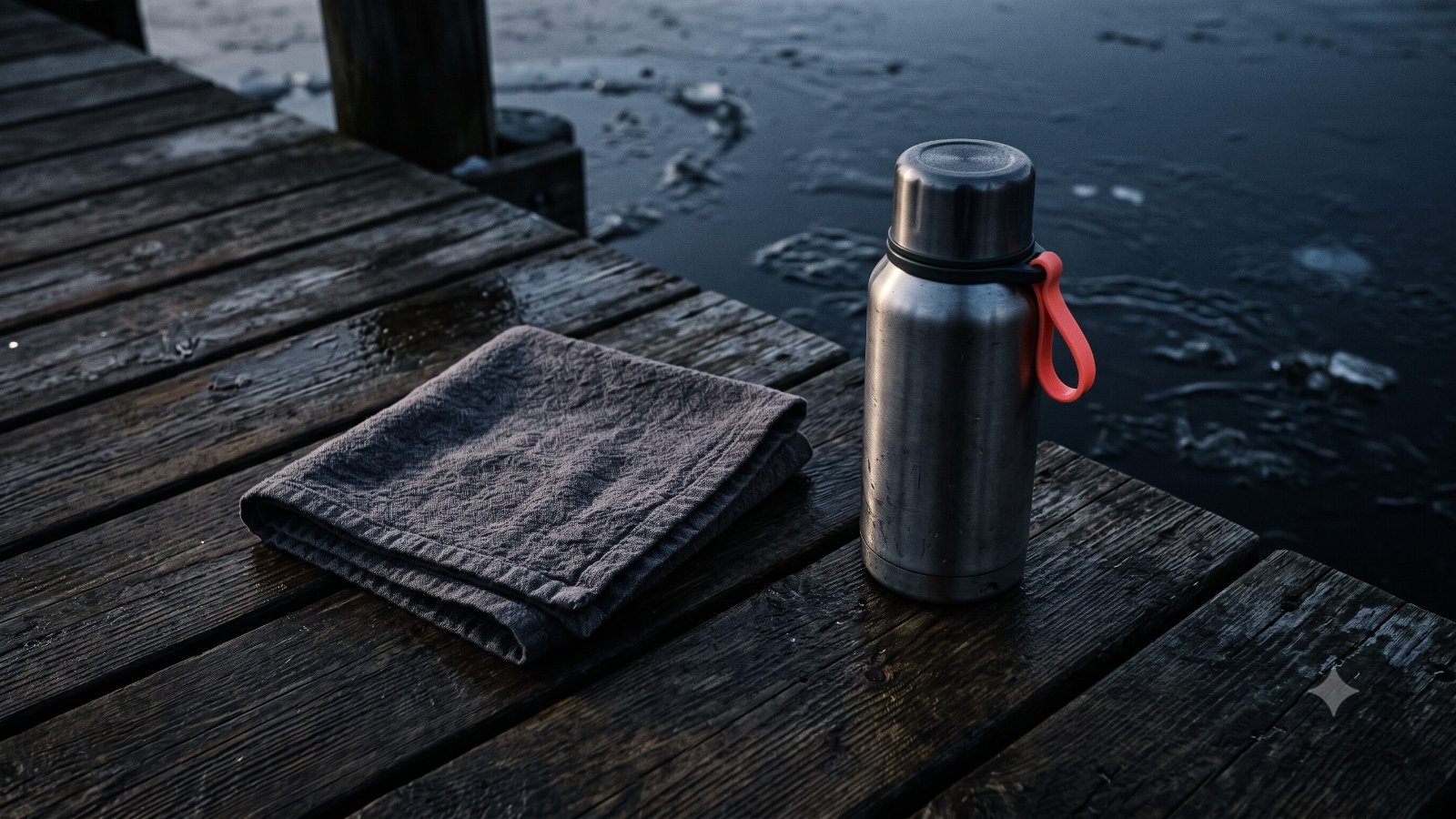
Short answer: Cold-water immersion has real, immediate effects on the body, and small studies suggest a short-lived mood lift. What is much less settled is whether regular dips deliver lasting health benefits, and the risks are real for some people. This article is informational only and is not medical advice.
Every winter, Polish lakes, rivers and stretches of the Baltic coast fill with people wading into near-freezing water. Morsowanie (Polish winter swimming, from mors, "walrus") has grown into a visible mass activity: at the 2023 International Walrus Gathering in Mielno, local media reported a record 8,893 people in the Baltic at once, in water of about 3°C. The culture is social as much as physical, with clubs, shared warm-ups and New Year's Day dips. The question is whether the health story attached to it is as strong as the crowds suggest.
What's Actually Real Here
The body reacts immediately and measurably. Water below about 15°C triggers the cold shock response: a gasp reflex, rapid uncontrolled breathing, a faster heart rate and a rise in blood pressure. Physiologists Michael Shattock and Michael Tipton describe this in The Journal of Physiology (2012), and UK weather and water-safety guidance puts the worst of it in roughly the first 90 seconds. This is the main reason cold water is dangerous, not a side note.
A short-term mood effect is plausible. A 2023 study in Biology by Yankouskaya and colleagues had 33 healthy adults take a five-minute head-out dip in water of about 20°C and measured mood and brain activity with fMRI before and after, with no control group. The positive changes (more energy, more confidence) were linked to changes in how brain networks communicate. It is a small experimental study of a single short exposure in much milder water than a Polish winter, so it supports at most a short-lived lift, not a lasting treatment effect.
Some longer-term signals exist, but they are mixed. A 2022 review of 104 human studies in the International Journal of Circumpolar Health (Espeland, de Weerd and Mercer) found some indications of benefit, including changes in body fat and improved insulin sensitivity. The authors also stress that many studies were small, often single-sex, and used very different exposure conditions, and concluded that the topic stays a subject of debate without better studies. A 2020 narrative review in IJERPH (Knechtle and colleagues) reports possible cardiovascular, metabolic, immune and psychological benefits, but says these appear mainly in experienced, healthy people who adapt gradually, and that the psychological evidence rests on small studies and a single case report.
The practice is popular for non-medical reasons too. Polish health outlet Halodoctor's explainer on morsowanie lists the claimed benefits, including better circulation, immune stimulation, stress relief through endorphins and extra calorie burning, and quotes a dietitian and trainer who recommends one or two sessions a week of seconds to a few minutes. That is an expert opinion in a consumer article, not clinical evidence.
Where the Hype Outruns the Reality
- "It boosts your immune system." Some observational work links regular winter swimming with fewer respiratory infections, but people who choose to winter-swim are not a random sample. The 2022 review treats the overall evidence as inconclusive, and its lead author has said many claimed benefits may not be causal and could come from an active lifestyle, social contact and mindset.
- "It melts fat." Cold does raise energy use while the body fights to stay warm, but the long-term weight effect in people is not well established, and a few minutes in cold water is not a weight-loss plan.
- "Anyone can do it if they toughen up." The same reviews that report benefits repeatedly warn that untrained, unsupervised people face the largest risks: cold shock, hypothermia, swimming failure, cardiac arrhythmia and drowning.
- "The cardiac risk is only theoretical." Shattock and Tipton propose that the cold shock response and the diving response can pull the heart in opposite directions when the face is submerged. In the laboratory studies they review, arrhythmias appeared in a majority of healthy young volunteers who combined face submersion with a breath-hold, compared with about 2% during free-breathing immersion. People with long QT syndrome, ischaemic heart disease or other heart rhythm conditions are the particular concern. The mechanism is a proposal backed by indirect evidence, and the data come from submersion and breath-holding, which is more extreme than a careful wade-in, but it explains why doctors urge caution.
- Anecdotes versus trials. Most "I feel amazing" testimony is self-selected and cannot separate the water from the company, the sunrise and the sense of achievement.
How People Approach It More Safely
These are general safety points drawn from the sources below, not medical instructions:
- Talk to a clinician first if you have a heart, blood pressure or circulation condition, a skin condition, are elderly or have limited mobility, or are simply unsure. The Halodoctor article names heart disease, low blood pressure and sensitive skin as reasons for caution.
- Go with others. Water-safety guidance advises going with others and telling someone your plans.
- Enter slowly and let the first minute or two pass before doing anything else. Do not dive or jump into very cold water, and do not put your head under at first.
- Keep early exposures short (seconds to a few minutes) and build up over weeks, not days. Reviewers recommend a step-by-step approach, especially before attempting water below 5°C.
- Plan the exit and the rewarm before you go in: dry clothes, a hat, a warm drink, shelter. Get out if you feel unwell or lose control of your breathing or movement.
- Leave a gap after eating. The Halodoctor article suggests at least an hour.
- If you get into trouble, lean back and float until the initial gasping passes, as water-safety bodies advise.
FAQ
Is morsowanie good for your health? Possibly in some respects, but the evidence is incomplete. Short-term effects such as the cold shock response and a temporary mood lift are well described. Lasting benefits for immunity, weight or mental health are still debated, according to a 2022 review of 104 human studies.
Who should avoid cold-water swimming or see a doctor first? People with heart or circulation conditions, low blood pressure, skin conditions, or limited physical capacity, and anyone unsure about their health. A clinician can give advice for your situation.
How long should a session last? There is no single figure. Consumer guidance in Poland suggests seconds to a few minutes, one or two times a week, starting short. Colder water and less experience mean shorter dips.
Is it safe to swim alone? Water-safety guidance says it is always safer to go with others. Cold shock can cause a gasp or loss of control within the first minute or two, even in strong swimmers.
Does it help depression or anxiety? Small studies report improved mood after dipping, but a few minutes of cold water is not a proven treatment for any condition. If you are struggling, speak to a doctor or mental health professional.
Things change quickly. This article reflects what was publicly known when it was written or last updated, so details such as prices, availability, rules and product specs may have changed since. Always check the official source before you buy or decide.
Sources
- Halodoctor: Morsowanie zyskuje zwolenników. Dla kogo zimne kąpiele? (Jan 2024)
- Shattock MJ, Tipton MJ. "Autonomic conflict": a different way to die during cold water immersion? J Physiol, 2012
- Espeland D, de Weerd L, Mercer JB. Health effects of voluntary exposure to cold water: a continuing subject of debate. Int J Circumpolar Health, 2022
- Knechtle B, et al. Cold water swimming: benefits and risks, a narrative review. Int J Environ Res Public Health, 2020
- Yankouskaya A, et al. Short-term head-out whole-body cold-water immersion facilitates positive affect and increases interaction between large-scale brain networks. Biology, 2023
- ScienceDaily: Cold water swimming may not reap as many health benefits as expected (2022)
- Met Office: Cold water shock, what it is and how to stay safe (July 2025)
- Radio Kielce: Prawie 9 tysięcy osób na XX Międzynarodowym Zlocie Morsów w Mielnie (Feb 2023)
Keep reading
Related articles
AI Health Coaches on Wearables: Is There Evidence They Work?
Fitbit and Whoop sell AI coaches; Oura is trialing one. We looked for evidence that they change behavior or health, and what does not exist yet.
6 min read

At-Home Microplastics Tests: What Your Number Can't Tell You
Mail-order microplastics tests give you a number, but experts say there is no standard to judge it against. Here is what they can and cannot tell you.
6 min read
Super-Foam Running Shoes for Everyday Runners: Do You Need Carbon and Max Cushioning?
Carbon-plated super shoes work at race pace, but the benefit shrinks and gets less predictable at everyday paces. Here is what the research says, and when a daily trainer is the smarter buy.
6 min read
Weight-Loss Pills in 2026: Do GLP-1 Tablets Live Up to the Hype?
The Wegovy pill and Lilly's Foundayo have made GLP-1s a daily tablet. They work, but not quite like the injections. Here's the honest picture.
8 min read