Indoor Golf Simulators Are Booming in Canada: Are They Worth It Over Winter?
Golf simulator lounges are opening across Canadian cities as a way to beat the winter shutdown. What they cost, what they're good for, and the catches.
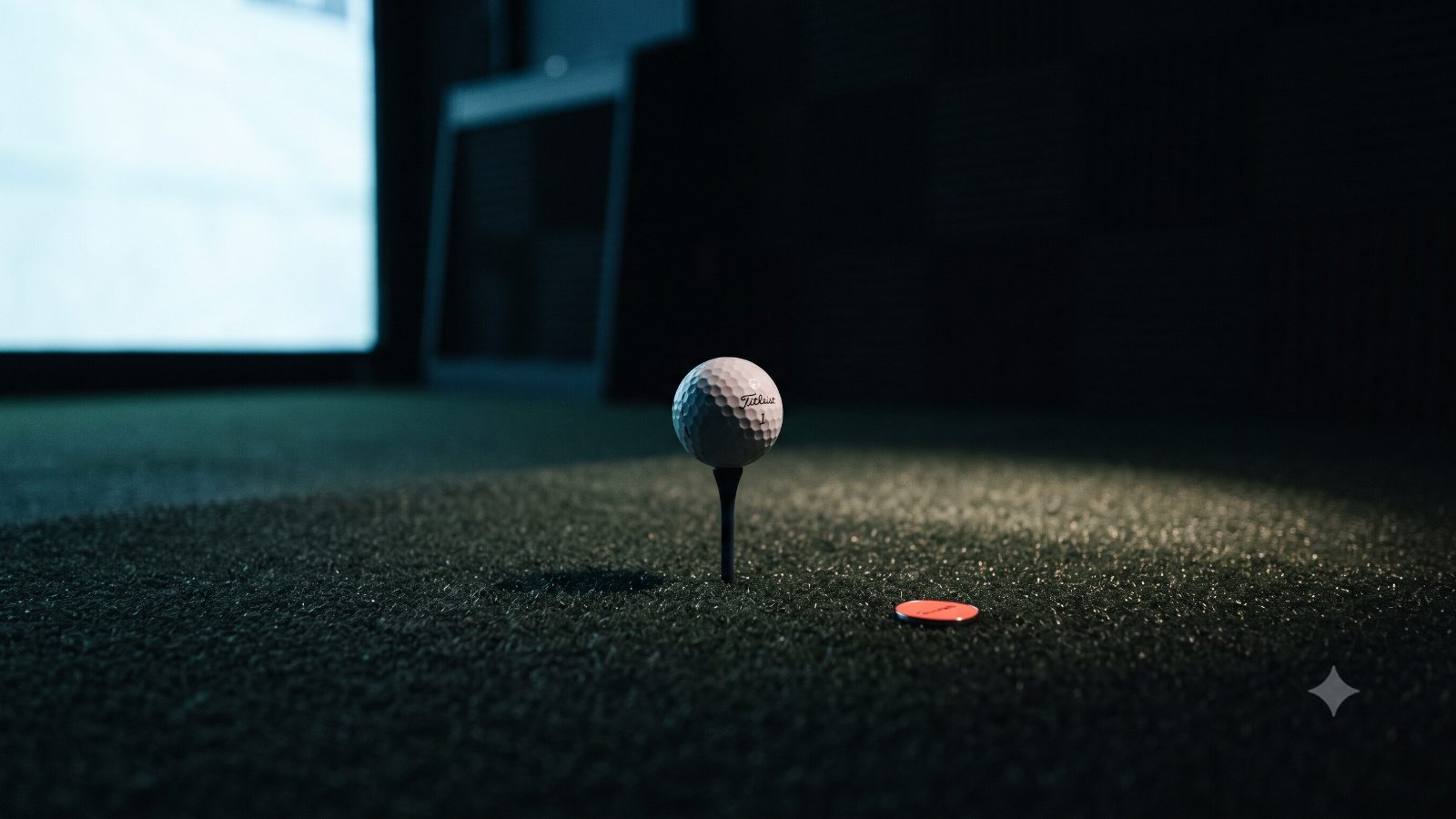
Short answer: Indoor golf simulators solve a real Canadian problem, the winter gap, and the better launch monitors measure ball flight well enough to be useful for practice and not just entertainment. The hype gets ahead of the evidence in three places: the idea that a simulator will automatically lower your scores, the idea that every number on screen is lab-accurate, and the idea that a home setup pays for itself. For most golfers, trying a venue first is the sensible move.
In much of Canada the golf season ends with the first hard frost. Simulator lounges have spread to fill the gap, and they are now as much about food, drinks and a night out with friends as they are about practice. The question is whether the technology and the economics hold up once the novelty wears off.
What's Actually Real Here
The market is growing. Golf Canada reported in November 2025 that the Canadian simulator market was projected to nearly double, citing Grand View Research. Grand View's Canada outlook puts revenue at about US$146 million in 2025 and about US$301 million by 2033, a growth rate of roughly 9.5% a year. That is a market-research forecast, so read it as a projection and not a fact.
The venues are built as social spaces. Golf Canada's profile of Silverwood's Golf and Lounge in the Ottawa suburbs describes standard bar seating, glassed-in VIP rooms and quieter private spaces, and says the audience includes women, younger urban golfers and after-work crowds, with full rounds playable in a compressed time and online booking. A local listing describes Silverwood's as having ten TrackMan 4 bays, with rates of $45 to $70 an hour depending on bay type and time of day. Check the venue's own site for current rates.
Ball-flight data from good launch monitors is reasonably accurate. In a 2017 study in the journal Measurement, researchers at Loughborough University (Leach and colleagues) tested a TrackMan radar unit and a Foresight GC2 with HMT camera system against a research-grade optical benchmark. Ball velocity and launch angle agreed closely: between 84% and 98% of ball-speed readings and between 87% and 97% of launch-angle readings were within the researchers' strict tolerance, depending on the device. The authors judged both suitable for coaching and club fitting.
Simulators are a legitimate coaching tool. Golf Canada notes that coaches use the technology for swing diagnosis, club fitting and slow-motion replay, and that it gives recreational golfers meaningful feedback. Golf Town's fitting studios likewise say their simulators run on Foresight technology.
Where the Hype Outruns the Reality
Not every number is equally reliable. The same Loughborough study found weaker agreement for spin rate (54% to 83% of readings within a tight tolerance), launch direction (71% to 76%) and especially clubhead speed (29% to 54%). It also tested specific, now older models in a lab setting and did not test putting or chipping. In short, treat ball speed and launch angle as solid, and treat the finer numbers as guides. Venue and home systems differ widely in quality, so a "TrackMan-level" experience is not guaranteed everywhere.
We found no evidence that simulators lower your scores. Data is useful, but we did not find peer-reviewed research showing that simulator practice improves on-course results compared with other practice. It is plausible that instant feedback helps, and many coaches rely on it, but plausible is not proven.
The short game is not what these systems are best known for. The research above concerns full swings. Putting, chipping, real turf and slope reading do not translate the same way indoors, so treat a simulator as a complement to the course and range, not a replacement.
"Reasonably priced" depends on how you count. Venues usually charge per bay, not per person. Splitsville's Calgary Highfield location, for example, lists simulator time from $33.74 for one hour (Monday to Thursday, weekends higher) for up to six guests, so a group splits the cost. A solo golfer paying $45 to $70 an hour at a lounge, however, can spend as much in a few sessions as some range memberships cost. Check your local range prices before comparing.
Home setups cost more than the headline price. A portable launch monitor such as the Garmin Approach R10 was listed at $869.99 CAD at one Canadian retailer, with a free 30-day trial of the Garmin Golf app and a paid subscription after. That is only the monitor. A simulator also needs a hitting space with enough room and ceiling height, a net or screen, a projector or monitor, a hitting mat and software, and prices for full builds vary widely. Many buyers also overestimate how often they will use it.
A Practical Approach
- Try a venue first. Book a bay for a group and see whether you enjoy it before spending on a home system.
- Ask what hardware the venue uses. Venues commonly advertise TrackMan or Foresight systems. Check the brand and the software.
- Do the per-person math. Divide the bay price by the number of people, and compare with your local range or other indoor-practice options.
- Use the data you trust. Focus on ball speed, launch angle and carry distance, and be cautious with spin and clubhead speed.
- Keep playing real golf. Take the habits you build indoors onto the range and the course when it reopens.
- For a home setup, list every cost (monitor, software subscription, enclosure, projector, mat, space) and be honest about how often you would play.
FAQ
Are golf simulators accurate? Good launch monitors measure ball speed and launch angle well in independent testing, but spin, launch direction and clubhead speed are less reliable. Accuracy varies by system.
How much does it cost to use one in Canada? Rates we found ranged from about $34 an hour at a bowling-venue simulator (weekday, up to six guests) to $45 to $70 an hour at an Ottawa lounge. Prices vary by city, time and bay type, and they are per bay.
Is a home golf simulator worth it? Only if you will use it often and have the space. A monitor alone can cost several hundred dollars, and the full setup costs more.
Can simulators improve your golf? They give useful feedback, and coaches use them, but we found no strong evidence on score improvement.
Are they a good winter option in Canada? Yes, if you want to keep swinging while courses are closed, since weather and daylight are not factors.
Prices mentioned in this article were checked at the time of writing and are given as "from" or approximate figures where possible. Actual prices vary by retailer, region, taxes, plan and promotion, so please do not treat the figures here as final. Check the seller's own site for the current price.
Things change quickly. This article reflects what was publicly known when it was written or last updated, so details such as prices, availability, rules and product specs may have changed since. Always check the official source before you buy or decide.
Sources
- Golf Canada: Swing all year, why golf simulators are Canada's new hot spot (Nov 2025)
- Grand View Research: Canada golf simulator market outlook
- Leach RJ, Forrester SE, Mears AC, Roberts JR. How valid and accurate are measurements of golf impact parameters obtained using commercially available radar and stereoscopic optical launch monitors? Measurement, 2017
- 613today: Silverwood's Golf and Lounge listing
- Splitsville Calgary Highfield: Golf simulators
- Niagara Golf Warehouse: Garmin Approach R10 launch monitor
- Golf Town: Custom fitting
Keep reading
Related articles
Every New Driver Promises More Distance: Are 2026 Clubs Really Better Than 5-Year-Old Ones?
Brands promise a longer driver every year. Independent 2026 tests suggest the rules cap the gains, and that fitting matters more than the model year.
7 min read
Pickleball in 2026: Still Booming or Has It Peaked?
Pickleball has been called a fad for years while participation kept climbing. The data show a real, maturing sport: 24.3 million US players, but growth has slowed sharply.
6 min read

The Retro Runner Trend: Which 2026 Sneaker Styles Are Worth Buying and Which Are Fading
Chunky, 90s-style running shoes have dominated sneaker culture for several years. We look at which retro trends still have legs and which have peaked.
6 min read
Hyrox in Europe: Is the Fitness Race Worth the Hype (and the Entry Fee)?
Born in Hamburg, Hyrox now fills arenas across Europe. It's a brilliant goal for gym-goers, but the true cost of a first race is closer to €1,000 than €100.
9 min read