Every New Driver Promises More Distance: Are 2026 Clubs Really Better Than 5-Year-Old Ones?
Brands promise a longer driver every year. Independent 2026 tests suggest the rules cap the gains, and that fitting matters more than the model year.
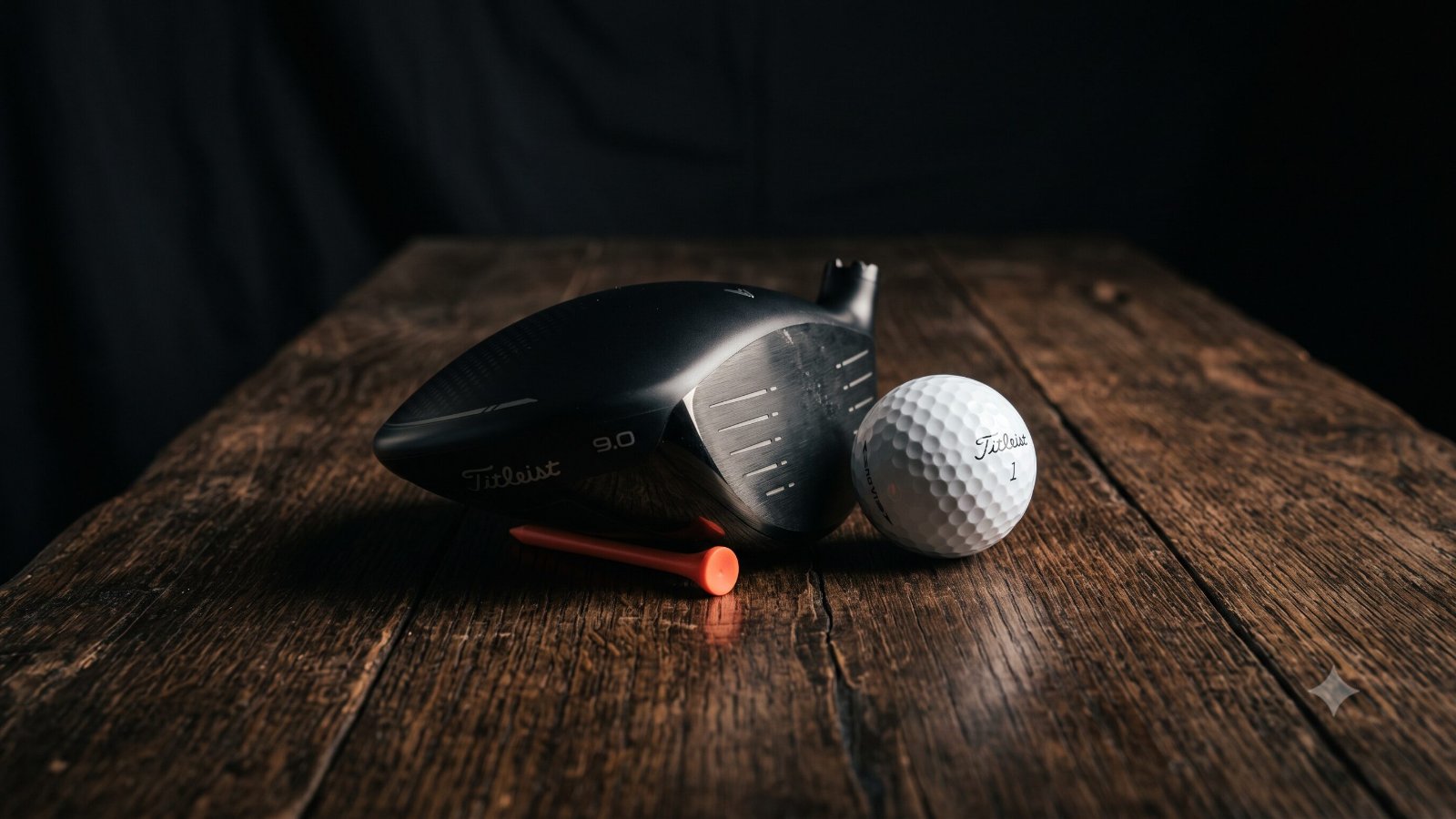
Short answer: Mostly hype, at least where distance is concerned. The rules cap how much spring a driver face can have, and the makers already build close to that cap. Independent 2026 testing found that a 2021 driver out-carried the newer models on centre strikes, and that the biggest differences are between individual golfers and individual models rather than between model years. If you are on a driver from the last few seasons, getting fitted to the right head, shaft and loft is likely to matter more than buying this year's release.
Hype-o-meter
Overhyped. The "longer than ever" line is the part that does not hold up. Forgiveness has improved over time, and that is real, but the yearly distance gains the marketing implies are small and in some tests undetectable.
What's actually going on
Every autumn and winter a new batch of drivers arrives with promises of faster faces, more ball speed and extra yards. The claim is attractive because the driver is the club most golfers would love to hit further.
The difficulty is the rulebook. Under the Rules of Golf equipment standards, a driver head may not exceed 460 cubic centimetres, and the springlike effect of the face is controlled by a measurement called characteristic time (CT). The limit is 239 microseconds, with a test tolerance of 18 microseconds that takes the maximum allowed in testing to 257 (Golf Digest's explainer on the limits, published in 2007). That is the current framework rather than the older coefficient of restitution figure that some golf writing still quotes.
Because every conforming driver sits under the same ceiling, brands cannot simply keep building faster faces. When the USGA and R&A announced their golf ball rollback plans, Golf.com reported that the governing bodies were also looking at drivers, in part because heads are manufactured close to the 239 microsecond limit and can drift over it with use. In other words, the ceiling is real and the manufacturers are already pressing against it.
What the makers can still change is the shape of the head, the weighting, the way the face flexes away from the centre, and how adjustable the club is. That points towards forgiveness and consistency, not a sudden jump in raw speed.
The evidence
A 2021 driver topped the centre-strike carry table. In a robotic test published by Golf Digest in July 2026, Golf Laboratories hit 74 drivers, dating from 2017 to the current 2026 crop, at 95 mph club speed with identical balls on a Foresight GCQuad. Six shots were struck from each of nine face zones. The Ping G425 LST, released in 2021, posted the longest centre-strike carry of the group at 231.2 yards, ahead of newer models. A robot at one swing speed is not a golfer, but it is a clean test of what the heads themselves can do.
Ten years of progress was worth about ten yards. MyGolfSpy compared the 2013 test winner (Callaway X Hot) with its 2023 winner (TaylorMade Stealth 2 Plus) using 10 testers with swing speeds between 85 and 110 mph and 15 shots per driver. Ball speed rose from 141.4 to 142.8 mph, carry from 233.0 to 240.9 yards and total distance from 246.1 to 256.4 yards. That is a gain of roughly 8 yards of carry and 10 of total over a decade, with no dispersion data published, so it says nothing about forgiveness. Spread across ten years, it is hard to see a meaningful step in any single one.
Within one year's models, the spread is bigger than the year-on-year gain. MyGolfSpy's 2026 driver test covered 42 models, 35 testers, 20,580 shots and a GCQuad. Ball speed ran from 139.88 to 142.89 mph, a spread of about 3 mph, and average carry from 229.01 to 238.93 yards across the field. Between the first and last placed models, the total distance gap was about 7 yards for slower swingers, about 11 for mid-speed swingers and about 20 for fast swingers. The same outlet noted that discounted previous-generation drivers, including the Titleist GT2 and GT3, remain competitive.
The right driver for you matters more than the newest. In a separate analysis of the same dataset, MyGolfSpy found that on average the best-fit driver added 15.0 yards (6.0%), while the worst-fit one cost 16.3 yards (6.8%). For 66% of testers the downside of a poor match was larger than the upside of a good one. For individual testers the gap between their best and worst driver ranged from 16 to 60.8 yards. On shot dispersion, the best match shrank the pattern for 77% of testers. This is not an argument against buying a new club; it is an argument for finding out which club suits your swing before spending.
Forgiveness varies by model, not just by year. The Golf Digest robot test found that the Ping G440 LST ranked first or second in every miss region despite not having the longest centre strike, while other heads favoured particular misses, for instance high-toe or heel strikes. Forgiveness is therefore a design choice, not an automatic benefit of a later release date.
Caveats
- Tests have limits. The robot test uses a single club speed and a fixed delivery, and the 2013 to 2023 comparison has ten testers. Neither tells you precisely what will happen to your swing.
- Test sponsors and outlets differ. MyGolfSpy and Golf Digest publish their own methodologies. Their rankings reflect their scoring choices, with MyGolfSpy for instance weighting distance at 40% of its overall score.
- Forgiveness is real but under-measured. The long-run comparison above did not include dispersion data, so it cannot confirm or deny the claim that modern heads forgive off-centre hits better than drivers from a decade ago. The 2026 data does show wide variation in miss tolerance between models.
- Rules can change. The governing bodies have said they are watching driver forgiveness at elite level. No driver rule change has been announced, but the situation is not necessarily fixed.
- Prices. New drivers are usually priced at a premium while previous-generation models are discounted, which shifts the value case towards older clubs.
Who it's for
Worth upgrading: a golfer whose driver is a decade old or more, whose current head is the wrong fit (for example the wrong loft or shaft), or who has lost confidence in it. A fitted new club can add real distance and tighten the pattern.
Probably not worth it: a golfer already on a driver from the last four or five seasons that was chosen with some care. The evidence suggests the club is not what is holding the score back.
Better first step: a fitting session with a launch monitor, whether or not you end up buying. Ask what the data show for your current driver as well as the new ones, and treat any retailer's claimed percentage of golfers who improve as marketing rather than independent evidence.
Verdict
Overhyped. The core claim, that each new generation of drivers is meaningfully longer than the one before, is not supported. The rules cap the face, the makers are already near the cap, a 2021 head led a 2026 centre-strike test, and a decade of progress was worth roughly ten yards. What is true is narrower: newer designs can be more forgiving, and matching a driver to your swing can be worth a great deal. Spend on fitting first, and buy new only if the numbers justify it.
Things change quickly. This article reflects what was publicly known when it was written or last updated, so details such as prices, availability, rules and product specs may have changed since. Always check the official source before you buy or decide.
Sources
- MyGolfSpy: Best Drivers of 2026
- MyGolfSpy: First vs. Worst Driver of 2026
- MyGolfSpy: Is it more important to find the right driver or avoid the wrong one?
- MyGolfSpy: Testing vs. Buying
- MyGolfSpy Labs: Best Golf Drivers, Then vs. Now
- Golf Digest: Driver testing of 74 models by robot (July 2026)
- Golf.com: The surprise in the golf ball rollback announcement
- Golf Digest: Driver limits explained (2007)
Keep reading
Related articles
Indoor Golf Simulators Are Booming in Canada: Are They Worth It Over Winter?
Golf simulator lounges are opening across Canadian cities as a way to beat the winter shutdown. What they cost, what they're good for, and the catches.
7 min read
Pickleball in 2026: Still Booming or Has It Peaked?
Pickleball has been called a fad for years while participation kept climbing. The data show a real, maturing sport: 24.3 million US players, but growth has slowed sharply.
6 min read

The Retro Runner Trend: Which 2026 Sneaker Styles Are Worth Buying and Which Are Fading
Chunky, 90s-style running shoes have dominated sneaker culture for several years. We look at which retro trends still have legs and which have peaked.
6 min read
Hyrox in Europe: Is the Fitness Race Worth the Hype (and the Entry Fee)?
Born in Hamburg, Hyrox now fills arenas across Europe. It's a brilliant goal for gym-goers, but the true cost of a first race is closer to €1,000 than €100.
9 min read